What Is AI Automation?
AI automation combines artificial intelligence with automation to perform tasks with minimal human intervention — and often with decision-making ability.
Instead of just following fixed rules (like traditional automation), AI automation can:
- Learn from data
- Recognize patterns
- Make predictions
- Improve over time
🔹 Simple Example
Traditional automation:
“If email contains ‘invoice’ → move to Finance folder.”
AI automation:
Reads the email, understands context, identifies urgency, extracts invoice data, and updates accounting software automatically.
🔹 Types of AI Used in Automation
- Machine Learning (ML) – Learns from historical data
- Natural Language Processing (NLP) – Understands text & speech (chatbots, email analysis)
- Computer Vision – Understands images & videos
- Robotic Process Automation (RPA) + AI – Automates complex workflows
🔹 Popular AI Automation Tools
- UiPath – RPA with AI integration
- Automation Anywhere – Intelligent automation platform
- Zapier – Workflow automation with AI features
- OpenAI – AI models used in automation
- Microsoft (Power Automate + AI Builder)
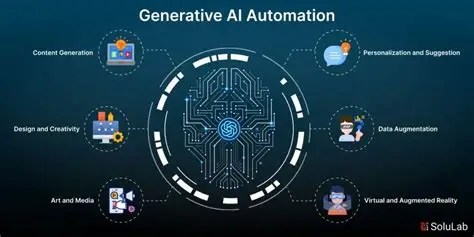
🔹 Where AI Automation Is Used
- Customer support (AI chatbots)
- Marketing (email personalization, lead scoring)
- Finance (invoice processing, fraud detection)
- HR (resume screening)
- E-commerce (recommendations)
- Healthcare (diagnosis assistance)
- Manufacturing (predictive maintenance)
🔹 Benefits
✔ Saves time
✔ Reduces human error
✔ Scales operations
✔ Cuts costs
✔ Works 24/7